How Much Does Website Design Cost in 2026?
Most professional website design projects run from a few thousand dollars for a focused business site to well into five figures for a large custom or ecommerce build. The headline number, though, matters far less than what sits behind it: the same "website" can cost wildly different amounts depending on how it is built, how much of the work is done for you, and how hard the site has to work after it launches.
This guide explains what you are actually paying for in 2026, how the main project types compare, what pushes a quote up or down, and where to put your budget so it earns its money back, without burying you in numbers that only ever applied to someone else's project.
What you are actually paying for
A website price is rarely just "design." A complete project usually bundles several distinct pieces of work:
- Strategy and structure – understanding your audience, your goals and the pages that actually drive enquiries or sales.
- Design – the visual concept, layout, typography and interactions that carry your brand.
- Development – turning that design into a fast, responsive, accessible site that works on every device.
- Content – copywriting, photography and preparing everything so the site is ready to launch, not half empty.
- Technical SEO and performance – clean markup, structured data and Core Web Vitals that help you rank and convert.
- Support – hosting, maintenance, security and updates once you are live.
When two quotes look far apart, the gap is almost always in how many of these are included, not in the "design" line by itself. A cheap quote often means several of these are missing and land back on your desk later.
Website design cost by project type
These are relative tiers, not fixed prices. Every serious project should be scoped before anyone quotes a real figure, because the details move the number far more than the label does.
| Project type | Relative investment | Best when |
|---|---|---|
| Small business site (custom template) | Entry level, fastest to launch | You need a clear, trustworthy presence without complex features |
| WordPress site with a custom theme | Mid range | Your team wants to edit content itself, without plugin bloat |
| Custom-coded website | Higher investment | Speed, a distinctive brand or specific functionality drive your results |
| Online shop | Varies most | You sell online; catalog size, integrations and checkout complexity set the price |
To see where your own project might land, browse live client sites and demos in the work and compare scope against finished results.
How you hire changes the price as much as the site does
Two businesses can build the "same" site for very different amounts simply because of who they hire. The ranges run surprisingly wide, and the right choice depends far less on the sticker price than on how well the route fits the job.
| Route | Relative cost | Best for | Main trade-off |
|---|---|---|---|
| DIY site builder | Lowest | Testing an idea, very tight budgets | Your time, and a ceiling you hit fast |
| Freelancer | Low to mid | Small, clearly scoped projects | Limited capacity across design, dev and SEO |
| Studio or agency | Mid to high | Business-critical sites needing strategy, design and build | Higher upfront cost |
| Website-as-a-service (monthly) | Spread over time | Predictable monthly budgeting | You rarely own the site outright |
There is no single right route. The real question is how central the website is to your revenue, and how much of the work you want off your plate.
What pushes the price up or down
Five factors explain most of the difference between a modest quote and a large one:
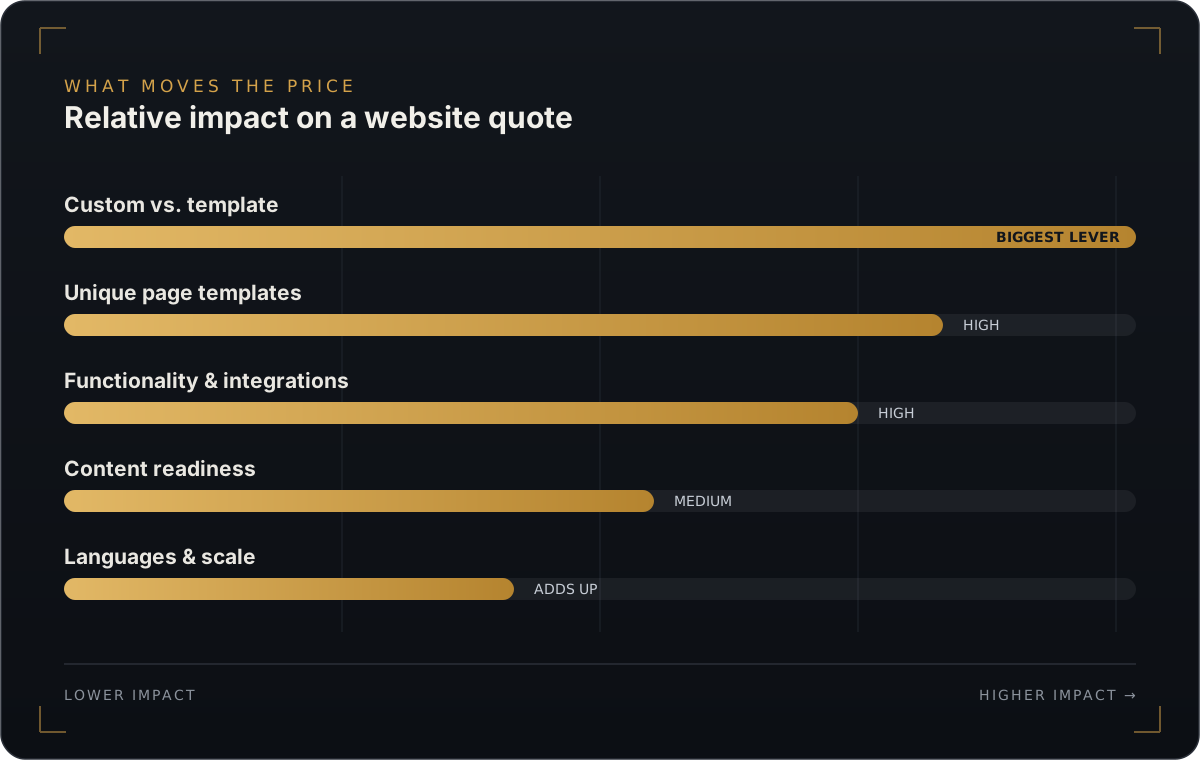
- Custom vs. template – bespoke design and code cost more than adapting a ready-made theme. It is the single biggest lever. Weighing it up? Read custom design vs. templates.
- Number of unique page templates – not total pages, but how many genuinely different layouts have to be designed and built.
- Content readiness – supplying clean copy and usable images saves real time and money; asking the studio to create it adds scope.
- Functionality – shops, bookings, member portals, integrations and automation all add work well beyond "design."
- Languages and scale – a bilingual or multilingual site multiplies content, testing and maintenance.
Performance belongs on this list too. A fast site is not a luxury: Google's Core Web Vitals influence both rankings and conversion, so speed built in from the start is far cheaper than speed bolted on later.
The cost you cannot see: owning a website
The build is only the first bill. Hosting, maintenance, security, backups and small ongoing changes continue for as long as the site is live, and over a three-year horizon those running costs often match or even exceed the original build. A slightly higher upfront investment in a lean, well-built site usually costs less to own than a cheap site that constantly needs patching.
Budget for the whole life of the site, not just launch day.
How to get the most from your budget
You do not need the biggest site; you need the right one. A focused, well-structured handful of pages, built properly, almost always outperforms a sprawling site that is hard to maintain.
- Prepare your content early. It is the most common cause of delays and change-order costs.
- Name one primary goal. Enquiries, bookings or sales – design the site around the action that matters most.
- Invest first in the pages that convert. Home, key service pages and contact earn their keep before a large blog does.
- Build lean, then grow. Ship a strong core and add sections once you can see what visitors actually do.
So, how much should you budget?
Match the spend to the job the site has to do. If your website is a digital business card, keep it lean and get live quickly. If it is a core sales channel, where brand, speed and specific features directly affect revenue, a custom build almost always pays back the difference. The proof is in outcomes: see how finished projects perform across our work.
Frequently asked questions
Why do website quotes vary so much?
Because "website" is not one product. Two quotes can differ several-fold based on custom vs. template work, how many unique layouts are involved, whether content is included, and what functionality is required. Compare what is inside each quote, not just the totals.
Is a cheap website worth it?
Sometimes. For a simple, short-lived presence, an inexpensive site is fine. But cheap builds often skip strategy, performance and content, which then cost more to fix later. Cheap upfront is not always cheap over three years.
Is a custom website worth it over a template?
It depends on how hard your site has to work. If speed, a distinctive brand or specific features drive your results, custom design usually earns back the investment. If your needs are simple, a good template is a sensible start. We break it down in custom design vs. templates.
What ongoing costs should I expect?
Plan for hosting, maintenance, security and occasional changes. Over a few years these can rival the original build, so factor them in from the beginning rather than treating launch as the final cost.
How long does a website take to build?
Anywhere from a couple of weeks for a lean template-based site to a few months for a large custom or ecommerce build. Content readiness is usually the biggest factor in how quickly a project moves.
Get a figure for your project
The honest answer to "how much does website design cost" is "it depends" – but it does not have to stay vague for your project. If you are unsure which direction fits your brand and budget, the Design Finder can point you to matching styles in minutes, or you can tell us about your project and we will send back a scoped, itemised quote with no guesswork.
Have a project in mind?
Tell us what you are planning and we will show you what it could look like.
More reading

Custom Website Design vs. Templates: Which Should You Choose?
Templates are fast and cheap; custom design is faster, more original and more flexible. Here is how to decide which one is right for your business.
Read article